Replacing What Time Took: Generated Covers at BookCove
A great many of the stories in this collection first appeared in magazines that were never meant to last. Pulp paper yellows and crumbles. Some issues were read to pieces or thrown out. Some covers were torn off and used for other purposes. At BookCove, we go to great lengths to include the original cover art—if we can find it. When no original cover survives, we turn to AI-generated images to fill the gap.
It is July of 2026. AI is moving fast. If I look back into "the early days" of image generation, the progress is striking. "Early days" at this pace was just last year, when the results were still rough and inconsistent. The first image below was originally produced with a lamp-post in his left hand. The problem was the base of the lamp-post was behind his left foot! We have replaced those early cover images with corrected versions that fix most of the obvious errors.
How BookCove uses it
The rule here is that a generated cover fills a gap; it never replaces or imitates a real one. Where an original cover exists and can be used, that is what appears on the site. Where nothing exists, a generated image gives the story a face, drawn from what the story itself contains—its setting, its period, its central image—rather than from any particular artist's work. AI is getting so sophisticated that I can tell it to read the short story and suggest scenes from the book that would make good covers for the cover art.
In practice, this means that when you see a generated cover on BookCove, it is there because no original cover could be found. The image is meant to give a sense of the story's world and tone, helping readers decide whether to explore further.
Examples
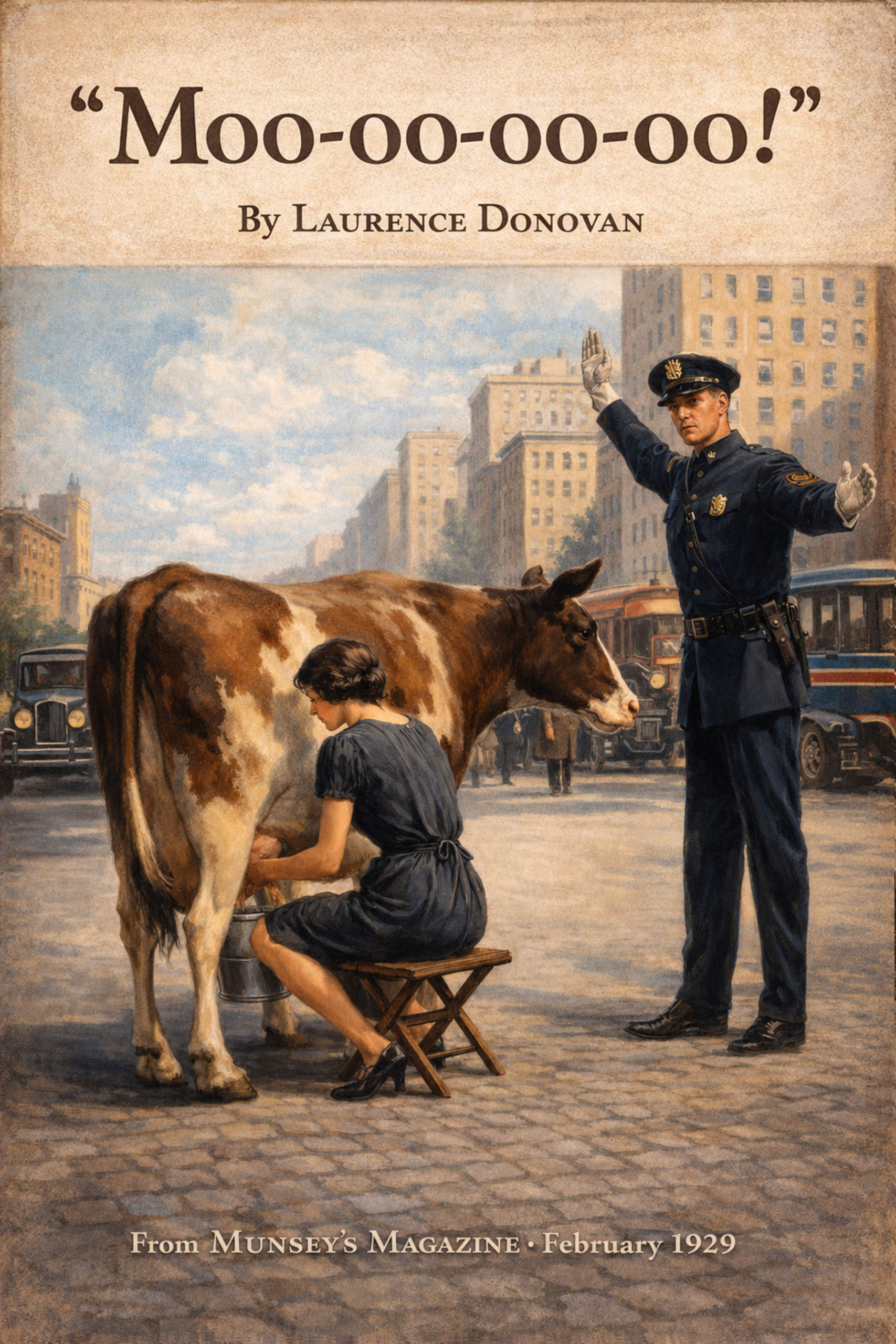
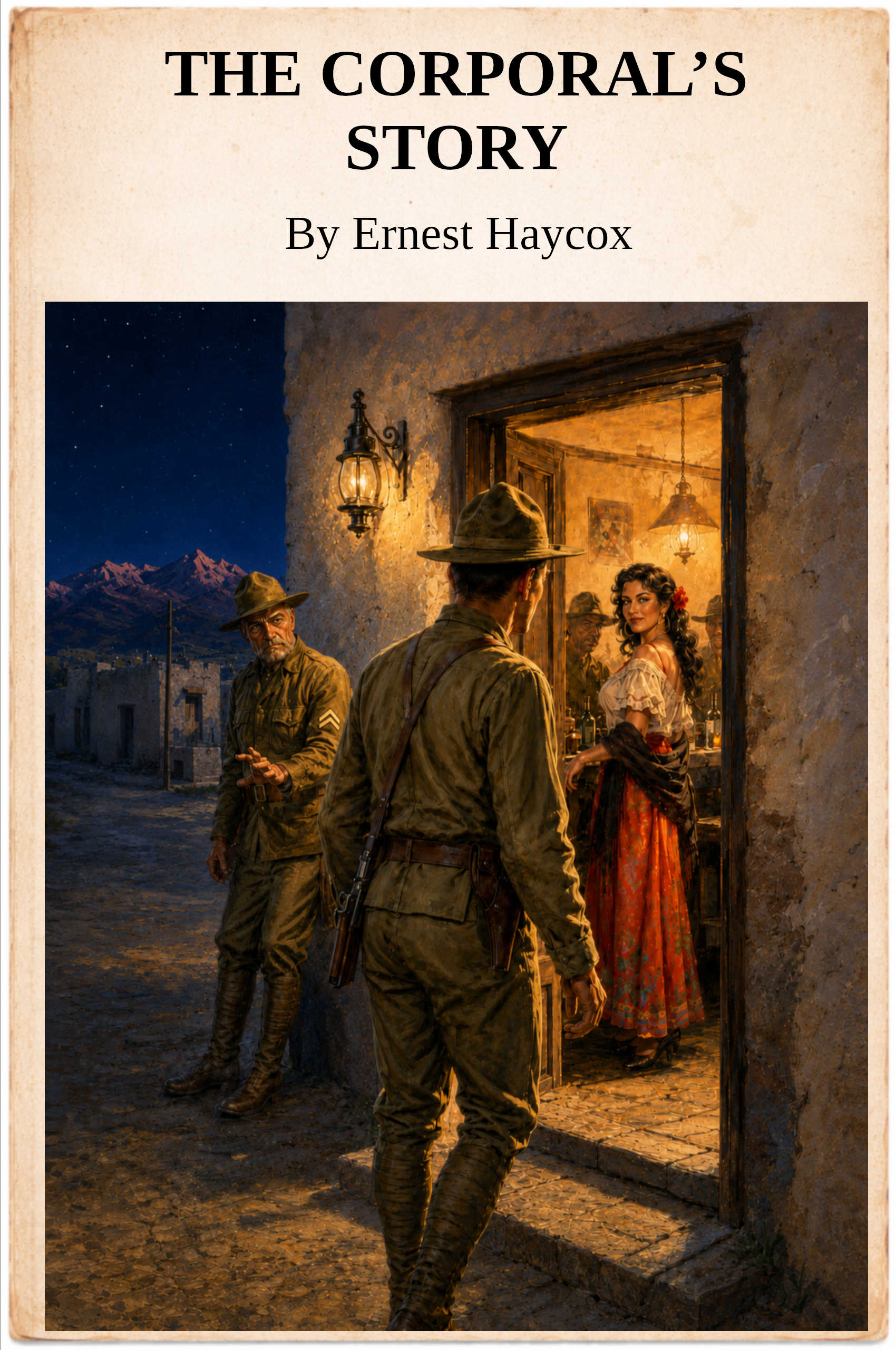
Here is another example of a generated cover for a story with no surviving original. Since uniforms were created for the image, we took the time to research the correct insignia and attire to ensure historical accuracy.
What we label
Generated covers are identified as such in the Transcriber’s Note for that book. A reader who wants to know whether they are looking at a period artifact or a modern reconstruction should be able to find out without guessing, and the answer should not depend on how carefully they inspect the image.