Leinster, Murray
← All authors
Murray Leinster was a pen name of William Fitzgerald Jenkins (June 16, 1896 – June 8, 1975), an American writer of genre fiction, particularly of science fiction. Leinster was born in Norfolk, Virginia, the son of George B. Jenkins and Mary L. Jenkins; his father was an accountant. A high school dropout, he nevertheless began a career as a freelance writer before World War I.
He wrote under numerous pseudonyms, including Murray Leinster, William Fitzgerald, Louisa Carter Lee, and Jean Farquar, and also wrote as Major Owen Hatteras, a house name that H. L. Mencken often used at The Smart Set magazine. He began publishing epigrams there in 1913, when he was just seventeen; his first identifiable work was a sketch under the pseudonym Jean Farquar titled "I Am Happy" in October 1915. His first story, "The Foreigner," appeared in The Smart Set in May 1916, followed by more than 1,500 others in a career that spanned half a century.
During World War I, Leinster served with the Committee of Public Information and the United States Army (1917–1918). His first science fiction story, "The Runaway Skyscraper," appeared in the February 22, 1919 issue of Argosy and was reprinted in the June 1926 issue of Hugo Gernsback's first science fiction magazine, Amazing Stories. In 1921, he married Mary Mandola, who was born in New York to Italian parents; the two had four daughters.
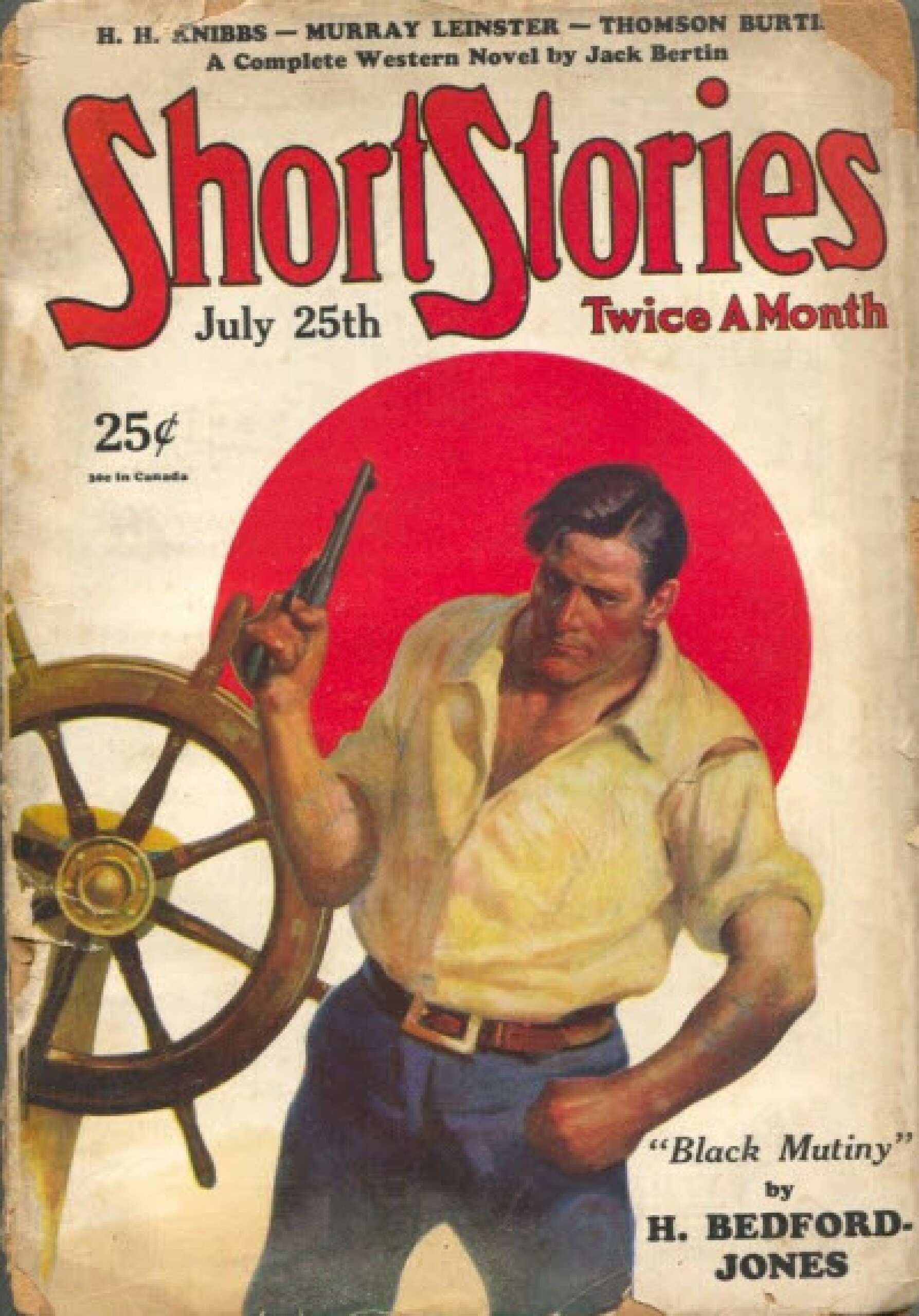
When the pulp magazines began to diversify into particular genres in the 1920s, Leinster followed suit, selling jungle stories to Danger Trails, westerns to West and Cowboy Stories, detective stories to Black Mask and Mystery Stories, horror stories to Weird Tales, and even romance stories to Love Story Magazine under the pen name Louisa Carter Lee. In the 1930s, he published several science fiction stories and serials in Amazing and Astounding Stories (the first issue of Astounding included his story "Tanks"), and his work continued to appear frequently in other genre pulps such as Detective Fiction Weekly and Smashing Western, as well as Collier's Weekly beginning in 1936 and Esquire starting in 1939. In June 1934, he published "Sidewise in Time" in Astounding, an early parallel universe story that had a long-term impact on other authors.
Books (1)
The Hand of God
On a sweltering Southern night, a lone sheriff sits in a lamplit jail with a loaded revolver on his desk and a murderer unconscious in a cell—while an angry mob gathers outside demanding justice on their own terms. Outgunned and outnumbered, he must hold the line between law and lynching long enough for the truth to surface. Murray Leinster's taut 1930 crime story is a masterwork of suspense and moral courage, set against the raw tensions of a small-town South where the line between justice and vengeance is razor-thin. When a single overlooked detail changes everything, the case that seemed open and shut becomes anything but.
![Book cover]()